


Acheter des costumes de luxe prêt-à-porter vs sur mesure : Comparaison
Lorsque vous hésitez entre un costume de luxe prêt-à-porter (PAP) et un costume entièrement sur mesure, le bon choix ne dépend pas du statut, mais de la qualité de fabrication, de la précision de l'ajustement, de la sélection du tissu et de la valeur totale sur le long terme. Ce guide explique comment l'artisanat italien se manifeste dans les deux approches, ce que vous pouvez réellement vous attendre à payer et quand, les risques à éviter, et comment choisir en toute confiance en fonction de votre morphologie, de votre emploi du temps et de vos objectifs de garde-robe.
Points clés / Résumé
- Fourchettes de prix (typiques pour la haute couture italienne) : PAP : 3 000 $ – 8 000 $ ; Sur mesure : 6 000 $ – 15 000 $ et plus (varie selon la maison, le tissu et le niveau de travail manuel).
- Précision de l'ajustement : le PAP est basé sur des patrons avec retouches ; le sur mesure est créé à partir de votre corps avec plusieurs essayages.
- Délais : le PAP est immédiat ou sous quelques jours ; le sur mesure nécessite généralement 8 à 12 semaines avec 2 à 3 essayages.
- Qualité de fabrication : les PAP haut de gamme (par exemple, Kiton) peuvent inclure des toiles entoilées à la main et des manches montées à la main ; le sur mesure ajoute généralement plus de travail manuel et une mise en forme spécifique au corps.
- Sélection des tissus : le PAP propose une sélection saisonnière organisée ; le sur mesure ouvre des catalogues de tissus beaucoup plus vastes (laine, lin, mélanges, fibres de luxe) pour des usages très spécifiques.
- Retouches : le PAP peut donner un excellent résultat si le patron de base convient à votre posture et à vos proportions ; le sur mesure corrige les asymétries uniques dès le stade du patron.
- Facteurs de risque : le premier sur mesure comporte une incertitude d'ajustement sur plusieurs essayages ; le risque du PAP est de trouver le bon patron de base et d'éviter les sur-retouches.
- Qui l'emporte : le PAP pour les besoins urgents, les tailles répétables et le port immédiat ; le sur mesure pour les morphologies uniques, les besoins complexes d'épaules/posture et les pièces "pour la vie" en tissu spécial.
- Références PAP de luxe italiennes de premier plan : Kiton est une référence pour la construction finie à la main et les tissus exceptionnels ; considérez leurs collections de costumes saisonnières comme exemples de l'artisanat italien.
- Ce qu'il faut rechercher : entoilage complet (non thermocollé), roulé du revers, expression de l'épaule, confort de l'emmanchure, travail manuel autour du col/de la manche, toucher du tissu et marge de retouche.
PAP vs Sur mesure : Ce qui définit chaque approche
Le PAP et le sur mesure peuvent être extraordinaires. Le PAP des maisons qui privilégient le travail manuel et les tissus exceptionnels offre une taille constante, une disponibilité immédiate et une quantité surprenante de confection artisanale. Le sur mesure part de votre corps spécifique et construit un patron autour de celui-ci, puis sculpte la forme et l'équilibre à travers de multiples essayages. Le choix dépend du temps, de la complexité de l'ajustement et de l'importance que vous accordez aux détails hyper-spécifiques par rapport à la rapidité et à la commodité.
Remarque : De nombreux fabricants proposent également le "made-to-measure" (MTM). Le MTM ajuste un patron existant avec des modifications de patron et un choix de tissu limités ; il peut être une voie médiane utile en termes de délais et de coûts, mais le vrai sur mesure offre un réglage structurel plus profond lorsque l'ajustement est complexe.
Comparaison de la qualité de fabrication : Main vs Machine
Au-delà de l'esthétique, la confection interne d'une veste détermine comment elle bouge avec vous et vieillit au fil des ans. Voici comment les deux approches se comparent généralement :
- Toile et revers : Le PAP italien haut de gamme comporte souvent une toile complète avec des revers rembourrés à la main qui créent un roulé doux et dimensionnel plutôt qu'une ligne plate et pressée. Le sur mesure va plus loin avec une mise en forme manuelle adaptée à votre poitrine et à l'inclinaison de votre épaule. Évitez les devants thermocollés dans les gammes de prix premium.
- Manche et emmanchure : Le PAP peut inclure des manches montées à la main qui tombent impeccablement en mouvement. Les tailleurs sur mesure ajustent l'inclinaison de la manche à votre posture réelle et peuvent affiner la taille de l'emmanchure pour le confort et la mobilité.
- Finitions : Les meilleurs fabricants de PAP finissent à la main les points de tension clés (col, emmanchure, boutonnières sur certaines lignes). Le sur mesure ajoute généralement plus de travail manuel partout et ajustera la silhouette à votre équilibre avant/arrière et à l'expression de votre épaule.
- Cohérence vs réglage : Le PAP permet une qualité prévisible et une nouvelle commande facile si vous connaissez votre taille. Le sur mesure permet une mise en forme de précision unique à votre morphologie (particulièrement utile si vous avez des asymétries).
Précision de l'ajustement : Taille du patron vs Votre corps
L'ajustement est souvent le point où la décision devient claire. Commencez par les zones les plus difficiles à retoucher.
- Parcours d'ajustement PAP : Commencez par le meilleur patron de base (épaule, poitrine, assise et longueur), puis affinez avec des retouches (longueurs de manches/ourlets, suppression de la taille, ajustements mineurs d'équilibre). Une base solide rend un excellent résultat PAP possible.
- Parcours d'ajustement sur mesure : Votre posture, l'inclinaison de votre épaule et vos asymétries sont prises en compte dans le patron. Les essayages (bâtis, première ébauche, finition) permettent des modifications incrémentales impossibles sur un vêtement PAP fini.
- Quand le PAP excelle : Corps de taille moyenne à athlétique, besoins urgents, ou lorsque vous avez une expérience préalable avec le patron et les préférences de forme d'un fabricant.
- Quand le sur mesure excelle : Baisse prononcée, épaules tombantes ou inégales, posture très cambrée ou dos creux, ou lorsque la mobilité des manches et la stabilité du col sont cruciales pour vous.
Coût total : Ce que vous payez
Pensez au-delà du prix affiché, à la durée de vie du vêtement et au temps que vous investissez pour le perfectionner.
- PAP (typique) : 3 000 $ à 8 000 $ selon le tissu et le travail manuel. Offre un port immédiat plus les coûts de retouches pour un ajustement parfait.
- Sur mesure (typique) : 6 000 $ à 15 000 $ et plus selon la maison, le travail manuel et le tissu. Vous payez pour la création du patron, les essayages et le façonnage manuel plus important.
- Vérification de la valeur : Si vous avez besoin d'une petite rotation rapidement, le PAP peut offrir un retour sur investissement exceptionnel. Si vous voulez une coupe signature dans un tissu rare avec un équilibre impeccable ajusté à votre anatomie, le sur mesure peut justifier le coût supplémentaire.
Délais : Quand le porterez-vous ?
Les délais décident souvent de la voie à suivre.
- PAP : Immédiat ou sous quelques jours, plus le temps des retouches.
- Sur mesure : Généralement 8 à 12 semaines avec deux à trois essayages. Des délais plus longs peuvent survenir en cas d'ajustements complexes ou de tissus spéciaux.
Conseil : Si votre tailleur préféré visite votre ville lors de ventes itinérantes, prévoyez à l'avance – réserver tôt assure des créneaux d'essayage et des tissus saisonniers.
Capacités de retouche
Les retouches peuvent affiner une excellente base ; elles ne peuvent pas reconstruire l'architecture. Connaissez les limites avant d'acheter.
- PAP : L'ourlet et la longueur des manches, la suppression de la taille, les ajustements mineurs d'équilibre sont courants. Les ajustements d'épaule et de col sont possibles mais doivent être abordés avec prudence pour éviter de compromettre la structure.
- Sur mesure : Les ajustements sont intégrés pendant les essayages, permettant des changements plus profonds sans perturber l'intégrité du vêtement.
Garde-fous pratiques : Évitez la chirurgie agressive des épaules sur le PAP ; confirmez les surplus de couture dans les pantalons et les manches pour de futurs ajustements ; et rappelez-vous que la longueur des manches doit être corrigée par le poignet chaque fois que possible, pas par l'épaule.
Sélection de tissus et savoir-faire italien
Les leaders italiens du PAP sélectionnent des tissus saisonniers qui se portent magnifiquement : laine, lin, mélanges de cachemire et compositions rares avec une texture et une profondeur subtiles. Le sur mesure élargit la gamme à de vastes catalogues de tissus où vous pouvez optimiser pour le climat, les voyages et les préférences de drapé. Les deux voies bénéficient de l'héritage textile italien : les usines produisant des laines tropicales légères, des lins à tissage ouvert impeccables et des mélanges luxueux conçus pour un drapé fluide et une résilience à long terme.
Pour des conseils plus approfondis sur les tissus, explorez Choisir le bon tissu pour les costumes à la manière de Kiton et apprenez à protéger les fibres rares dans Comment entretenir les vêtements en vigogne.
Facteurs de risque à considérer
Les deux approches comportent des risques ; la clé est de savoir où les problèmes surviennent généralement – et comment les prévenir.
- Risque pour le premier sur mesure : Sans relation préalable ou briefing de style clair, le premier patron peut nécessiter des essayages supplémentaires avant d'être « vous ». Les délais peuvent s'allonger.
- Risque d'ajustement PAP : Si le patron de base ne convient pas à votre posture/épaules, les retouches peuvent être étendues avec des rendements décroissants. Priorisez la correspondance épaule/poitrine avant tout.
- Risque de tissu : Choisir un tissu uniquement au toucher ou à la couleur sans tenir compte de la récupération des plis, du poids et du climat peut être décevant. Vérifiez avec votre environnement typique et vos habitudes de voyage.
Atténuation : Apportez une veste bien ajustée pour évaluer la largeur des épaules et l'équilibre ; accordez-vous sur la position des boutons, la largeur du revers et la hauteur de la taille du pantalon avant de couper en sur mesure ; et demandez un essayage en bâti si proposé.
Matrice de proposition de valeur : Quand chaque option l'emporte
- Rapidité et fiabilité (réunion du conseil la semaine prochaine) : Le PAP l'emporte — disponibilité immédiate, retouches mineures, patron éprouvé.
- Anatomie complexe (asymétrie, posture unique) : Le sur mesure l'emporte — patron construit autour de vous, équilibré par des essayages.
- Silhouette distinctive et tissu rare : Le sur mesure l'emporte — contrôle de la largeur du revers, des pans, de la position des boutons et des tissus spéciaux.
- Construire une petite rotation efficacement : Le PAP l'emporte — taille prévisible, acquisition plus rapide, coût total en temps inférieur.
- Pièce d'investissement à long terme : Les deux peuvent l'emporter — choisissez en fonction de la complexité de l'ajustement et de votre exigence en matière de silhouette et de détails.
Processus de décision (Choisissez votre voie)
- Avez-vous besoin du costume dans les 2 semaines ?
- Oui → PAP.
- Non → Passez à l'étape 2.
- Votre posture/architecture d'épaule est-elle exigeante (épaules inégales, tête très en avant, dos creux) ?
- Oui → Sur mesure fortement recommandé.
- Non → Passez à l'étape 3.
- Préférez-vous contrôler la largeur du revers, les pans, le style des poches et un tissu rare ?
- Oui → Sur mesure.
- Non → Passez à l'étape 4.
- Connaissez-vous déjà un fabricant de PAP dont le patron vous va bien ?
- Oui → PAP (ajoutez des retouches expertes).
- Non → Essayez d'abord des essayages PAP ; si les épaules/la poitrine ne correspondent pas, envisagez le sur mesure.
Exemples de costumes prêt-à-porter : L'artisanat italien en pratique
Vous trouverez ci-dessous une sélection de costumes PAP Kiton pour illustrer la variété des tissus et les philosophies de construction au fil des saisons. Chaque exemple est une référence pour les matériaux et la confection ; considérez-les comme des repères lors de l'évaluation de la qualité, du drapé et des finitions. Pour un cadre plus large d'évaluation des costumes artisanaux, consultez Acheter des costumes italiens faits à la main : Le guide définitif.

Costume 2 boutons Kiton en laine vierge bleue
Marque : Kiton
Matière : Laine vierge
- Devant à 2 boutons
- Couleur : Bleu
- Nuance polyvalente pour le bureau et le dîner avec un roulé de revers raffiné
- Idéal comme pièce maîtresse toute l'année dans les climats tempérés

Costume Kiton en cachemire, soie et lin gris
Marque : Kiton
Matière : Cachemire, Soie, Lin
- Couleur : Gris
- Tissu mélangé raffiné pour un drapé équilibré
- Toucher doux avec une texture subtile ; excellent pour un style business-casual élégant
- Assez respirant pour les longues journées et les voyages
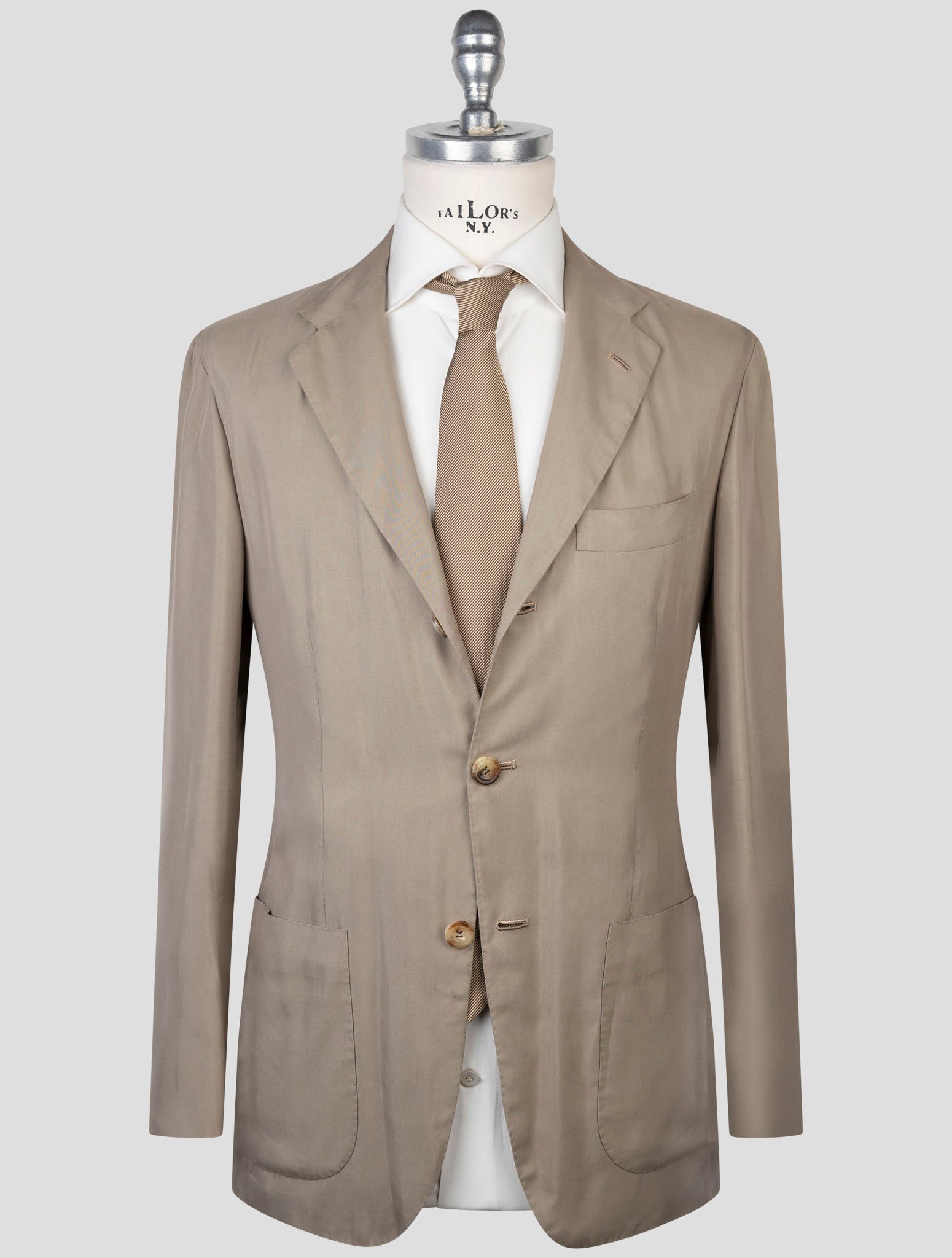
Costume Kiton en lyocell, viscose et soie taupe
Marque : Kiton
Matière : Lyocell, Viscose, Soie
- Couleur : Taupe
- Toucher léger et fluide
- Drapé décontracté et tonalité moderne pour le temps chaud
- Se marie sans effort avec des chemises neutres et des accessoires minimalistes

Costume Kiton en cachemire, laine vierge, soie et lin bleu
Marque : Kiton
Matière : Cachemire, Laine vierge, Soie, Lin
- Couleur : Bleu
- Mélange multi-fibres de luxe
- Combine douceur, résilience et respirabilité
- Choix raffiné pour les réunions importantes et les événements en soirée

Costume Kiton en lin vert
Marque : Kiton
Matière : Lin
- Couleur : Vert
- Tissage léger prêt pour l'été
- Texture naturelle et élégance décontractée pour les climats chauds et ensoleillés
- Excellent avec des chemises blanches impeccables et des mocassins en daim

Costume Kiton croisé en cachemire, soie et lin avec pantalon court bleu
Marque : Kiton
Matière : Cachemire, Soie, Lin
- Devant croisé
- Costume avec pantalon court ; Couleur : Bleu
- Option de tenue pour temps chaud avec une sophistication décontractée
- Idéal pour les séjours en station balnéaire et les événements créatifs-formels
Comment acheter du prêt-à-porter comme un expert
Abordez le prêt-à-porter de manière méthodique et vous obtiendrez un résultat rivalisant avec de nombreuses tenues sur mesure.
- Commencez par l'épaule : L'épaule et le col de la veste doivent être impeccables, sans creux ni bâillement. C'est la zone la plus difficile à ajuster.
- Vérifiez la poitrine et l'emplacement des boutons : Le bouton supérieur d'une veste à deux boutons ne doit ni tirer ni s'affaisser. Le revers doit tomber naturellement sur le bouton.
- Confort de l'emmanchure : Levez les bras et tendez-les en avant pour tester les restrictions ; des emmanchures bien ajustées doivent bouger avec vous, pas contre vous.
- Évaluez le tombé de la jupe : Recherchez des lignes épurées sans évasement excessif ni affaissement au niveau des fentes.
- Laissez de la marge pour les retouches : Assurez-vous que les manches et les pantalons ont suffisamment de tissu supplémentaire là où c'est nécessaire pour les ajustements.
- Apportez le bon équipement : Essayez avec les chaussures et la chemise que vous porterez ; vérifiez que 0,25 à 0,5 pouce (0,6 à 1,2 cm) de manchette de chemise est visible.
- Hauteur et cassure du pantalon : Confirmez une hauteur qui correspond à la longueur de votre torse et un ourlet qui effleure la chaussure pour un style classique, ou légèrement plus court pour un style moderne.
Pour plus de contexte sur la confection pour différentes occasions, explorez Les plus beaux costumes sur mesure Kiton pour les occasions spéciales.
Quand le sur-mesure est le plus judicieux
Investissez dans le sur-mesure lorsque vous souhaitez optimiser votre silhouette et votre confort au-delà de ce que n'importe quelle coupe de prêt-à-porter peut offrir. Un tailleur sur mesure alignera le col à la posture de votre cou, fera pivoter l'inclinaison des manches selon votre posture naturelle, équilibrera les quarts avant/arrière et ajustera le tombé et l'ouverture du revers selon vos goûts. Vous obtenez également un contrôle total sur les paramètres du tissu (poids, torsion, finition) qui affectent la récupération des plis, la respirabilité et le tombé dans votre environnement.
Préparez-vous au succès : Arrivez avec des photos de référence de silhouettes que vous admirez ; mettez-vous d'accord sur la largeur du revers, l'emplacement des boutons, le style des fentes et la hauteur du pantalon avant la coupe ; et portez vos chaussures habillées habituelles pour les essayages afin que l'ourlet et l'équilibre soient précis.
Tissu et saisonnalité : une approche pratique
Associez le tissu au climat et au rythme d'utilisation pour maximiser le confort et la longévité.
- Climats tempérés : La laine à torsion élevée de poids moyen peut couvrir la majeure partie de l'année, conservant sa forme et résistant aux plis.
- Climats chauds ou voyages fréquents : Le lin et les mélanges respirants excellent ; les mélanges avec de la soie peuvent adoucir la texture visuelle tout en conservant la structure.
- Climats froids : Les laines plus lourdes et les mélanges laine-cachemire offrent chaleur et richesse avec des lignes plus lisses.
Pour l'entretien et la longévité à travers les saisons, consultez Conseils de rangement des vêtements d'hiver 2025.
Mentalité de retour sur investissement : la garde-robe comme un atout
De nombreux cadres mesurent le retour sur investissement de leur garde-robe par le coût par utilisation et le coût d'opportunité du temps. Le prêt-à-porter l'emporte souvent sur la rapidité et la prévisibilité – surtout lorsque vous connaissez votre taille et la coupe d'un fabricant. Le sur-mesure peut être plus performant au fil des ans si la coupe débloque la confiance, le confort et une présentation distinctive qui soutient votre image. Pour une approche structurée de la valeur, utilisez le Calculateur de retour sur investissement de la garde-robe des cadres 2025.
Liste de contrôle de qualité (à utiliser en magasin ou chez votre tailleur)
- Roulement du revers : Roulement doux jusqu'au bouton, non surpressé ou plat.
- Sensation de l'entoilage : Pincez délicatement le tissu avant pour sentir un entoilage flottant (pas de rigidité collée).
- Stabilité du col : Le col ne doit que très peu se soulever lorsque vous bougez ; pas de bâillement à l'arrière du cou.
- Angle de la manche : Pas de lignes de traînée diagonales lorsque les bras sont au repos naturel.
- Ligne du pantalon : Tombé net le long de la cuisse ; l'ourlet effleurant juste la chaussure si classique, plus court si moderne.
- Boutonnières et finitions : Coupe et finition nettes ; la régularité signale le soin apporté à chaque étape.
- Raccord des motifs : Les carreaux/rayures doivent s'aligner au niveau des poches, des coutures et du centre du dos, le cas échéant.
Entretien et soin
- Brosser et laisser reposer : Alternez les costumes et brossez-les après les avoir portés pour enlever la poussière et raviver les fibres.
- Vaporiser, ne pas trop presser : Utilisez la vapeur pour éliminer les plis et préserver le roulement du revers.
- Ranger avec de l'espace : De bons cintres, des housses de vêtement et un rangement frais et ventilé prolongent la durée de vie.
- Nettoyer avec parcimonie : Préférez le nettoyage localisé et le pressage professionnel occasionnel ; nettoyez à sec uniquement si nécessaire.
- Prévention des mites : Utilisez du cèdre ou de la lavande et assurez-vous que les vêtements sont propres avant un rangement prolongé.
Recommandation finale
Si vous constituez rapidement une garde-robe de travail, commencez par le prêt-à-porter — concentrez-vous sur l'ajustement des épaules, le tissu respirant et un tombé impeccable, puis faites des retouches minimales. Si vous êtes prêt à affiner la silhouette et le confort au plus haut niveau, commandez du sur-mesure avec un cahier des charges clair et suffisamment de temps pour profiter du processus. Les deux approches peuvent offrir un savoir-faire et des matériaux de qualité italienne — le choix gagnant est celui qui correspond à votre emploi du temps, à votre morphologie et à votre utilisation.
Vous souhaitez des conseils personnalisés ?
Réservez un entretien individuel pour harmoniser votre budget, vos préférences de construction et vos tissus avec votre calendrier et vos besoins de voyage : Réserver un rendez-vous de Personal Shopping Kiton 2025. Vous obtiendrez des recommandations claires et un plan qui respecte à la fois le savoir-faire et la valeur.